Understanding Mold Testing Versus Inspection: What Hallandale Beach Homeowners Really Need to Know
After handling mold remediation Hallandale Beach FL jobs more times than I can count, I’ve learned that most folks get the difference between mold testing and inspection completely wrong. It’s not just a matter of picking one or the other — the mistake I see over and over is thinking they serve the same purpose or that testing alone tells the whole story. I’ve been doing this long enough to know the difference—and that context matters here, especially given our local humidity and storm patterns.
When you’re facing mold issues, knowing exactly what you’re dealing with can save you thousands in unnecessary repairs or ineffective mold removal services Hallandale Beach residents rely on. The key is understanding what mold inspection versus testing really means, how they fit in the mold remediation process steps, and why rushing to testing without a thorough inspection often leads to missed problems.
Mold inspection in Hallandale Beach involves a visual assessment to identify visible mold and moisture issues, while mold testing collects samples to determine the type and concentration of mold spores. Homeowners primarily need an inspection to locate problem areas, with testing recommended only if the source or mold type is unclear. This approach ensures accurate diagnosis and effective remediation.
Most Companies Tell You Testing Is Enough. Here’s What I’ve Found Doing This Work Every Day.
Most companies push mold testing as the silver bullet. They’ll send you a kit or collect samples and tell you exactly what mold species are present. That’s useful information, sure. But in Hallandale Beach, FL, relying solely on mold testing without a proper inspection is usually a shortcut to trouble.
Here’s the deal: mold testing only tells you what’s floating around or caught on a surface at a precise moment. It doesn’t identify hidden colonies inside walls, under floors, or behind drywall—places that mold inspection methods are designed to uncover. Testing can miss the bigger, structural problems that cause mold growth in the first place.
For example, I’ve seen homes near Hallandale Beach Blvd where a quick test came back “low mold spore count,” but the thorough mold assessment uncovered leaking pipes behind the walls causing far more damage. Without that inspection, owners would have thought their home was safe, wasting money on surface mold removals that never addressed the source.
How I Define Mold Inspection Versus Testing And Why It Matters
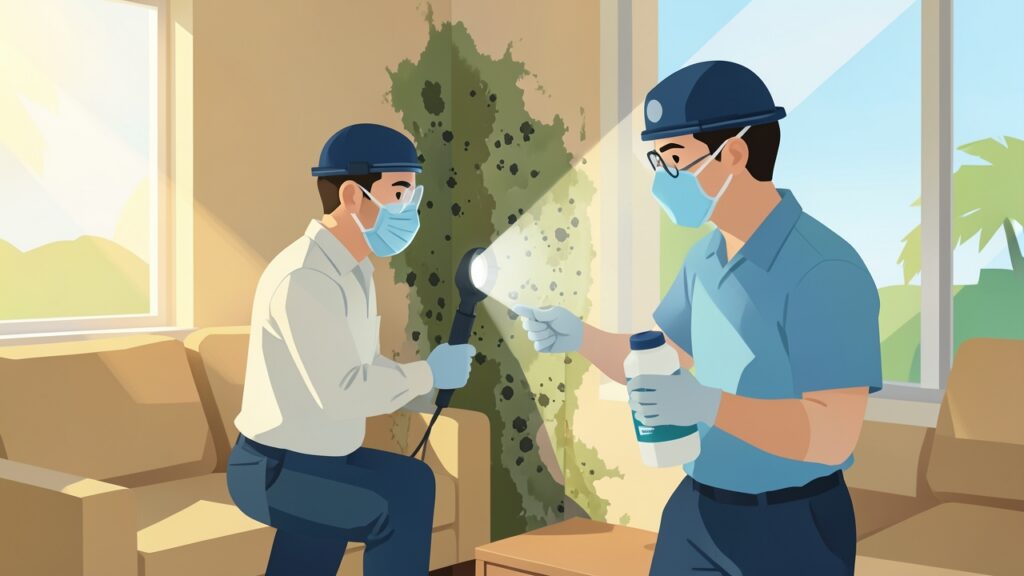
Mold inspection is hands-on and detailed. It involves visual checks, moisture readings, and sometimes cutting into walls to find hidden mold problems. Professional mold testing methods come into play during or after inspection to confirm what species exist and at what concentration.
The mold assessment and inspection differences are crucial: inspection is about finding the “where” and “why,” while testing tells you the “what.” I always start with an inspection to map out problems, then use testing to validate findings or catch airborne spores that aren’t visible.
According to IICRC guidelines, proper remediation requires both steps—skipping the inspection means you might only treat symptoms, not causes.
Specific Local Patterns I’ve Seen That Affect Mold Remediation in Hallandale Beach
Here in Hallandale Beach, our warm, humid climate is a perfect storm for mold growth. The summer months keep humidity steady between 70-90%, and after every hurricane like we’ve had along U.S. 1, I see a spike in mold damage cleanup Hallandale Beach homes need. Water intrusion from roof leaks or poor drainage in neighborhoods like Gulfstream often hides behind walls until visible mold appears.
Another thing I watch closely: many homes in areas like Hallandale Beach Shores were built before modern Florida Building Code moisture standards took hold. The older building stock often uses materials that absorb moisture readily, so tiny leaks turn into full-blown mold growth much faster than new construction.
I’ve also noticed many HOAs here impose tight restrictions on repairs, meaning mold remediation can drag out if you don’t get permits or inspections right the first time. I handle those permits personally to save homeowners needless delays.
What a Fair Mold Inspection Cost Looks Like in Hallandale Beach
Mold inspection cost Hallandale Beach varies depending on the home size and complexity. I give free estimates on every mold assessment and inspection, and for typical single-family homes, a thorough inspection with basic air and surface testing usually runs between $350 and $600.
That includes:
- Visual inspection of all suspect areas, including attics and crawl spaces
- Moisture meter readings to find hidden damp spots
- Air sampling using HEPA-filtered pumps for indoor mold testing techniques
- Lab analysis of collected samples with detailed reports
If the inspection finds no actionable mold problems, I tell you straight up—there’s no point in spending more. For urgent calls I’m usually available same-day, especially during hurricane season when mold problems spike.
Signs You Need Mold Remediation: A Diagnostic Checklist for Hallandale Beach Homes
Wondering how to identify mold problems yourself? Watch for these warning signs that mean it’s time to schedule mold remediation:
- Musty, damp odors that linger even when windows are closed
- Visible discoloration or fuzzy patches on walls, ceilings, or baseboards
- Health symptoms like sneezing, headaches, or respiratory irritation that worsen at home
- Warped or bubbling paint and wallpaper — signs of moisture buildup behind surfaces
- Persistent condensation on windows or walls in high humidity months
If you spot any of these, professional home mold assessment services are worth the investment. Don’t mistake a quick surface clean for a full mold removal and prevention solution—especially in our climate.
How I Approach Mold Removal and Prevention Tips You Can Actually Use
The mold remediation process steps I follow start with containment and source removal—no cutting corners. For mold removal services Hallandale Beach owners trust, I use industry-standard products like Concrobium for surface treatments and HEPA air scrubbers to trap spores during cleanup.
Here’s what I tell customers about prevention after remediation:
- Fix leaks immediately, whether it’s a faulty plumbing joint or a compromised roof shingle.
- Use dehumidifiers during summer months to keep indoor humidity under 60%—essential given our local climate.
- Maintain proper ventilation in bathrooms and kitchens with exhaust fans vented outdoors.
- Regularly inspect crawl spaces and attics for signs of moisture or mold growth.
- Choose mold-resistant building materials when renovating or repairing.
I stand behind all my work with a solid warranty on labor. If something isn’t right, I’ll come back and fix it. That’s not standard in this industry, but it’s how I handle my mold remediation.
Three Questions You Should Ask Before Choosing a Mold Inspection Company
Picking the right company to handle your mold inspection or testing is critical. Here are three questions I always recommend homeowners ask:
- Are you licensed and insured for mold remediation in Florida? Without proper licensing, you risk hiring someone who isn’t trained to handle hazardous mold safely.
- Do you follow IICRC S520 standards for mold remediation? This certification means the company adheres to industry best practices recognized nationwide.
- Will you provide a clear, itemized quote and explain each step of the mold remediation process? Transparency in pricing and process keeps surprises off your bill and ensures you understand what’s being done.
These questions help weed out companies that only do superficial testing or quick fixes. For more in-depth guidance on picking the right mold remediation steps, check out my post on How to Choose the Right Mold Remediation Steps for a Safe, Eco-Friendly Home.
FAQ: Mold Testing vs Inspection Explained
Q: Can I perform mold testing myself?
A: DIY test kits can show if mold spores are present but won’t reveal hidden damage or the moisture source. Professional inspections are crucial for a complete assessment. You can see more on whether do-it-yourself mold remediation is safe here.
Q: How much does mold remediation cost in Hallandale Beach, FL?
A: It depends on the severity and location of mold growth. Small surface mold removals might run a few hundred dollars, but full structural remediation can reach several thousand. I give free estimates and walk you through what’s needed before you decide.
Q: When should I schedule mold remediation?
A: As soon as you confirm mold presence affecting your home’s structure or health. Delays only let mold spread, increasing cleanup costs and health risks. The post-hurricane period is a particularly critical time in Hallandale Beach for mold inspections and remediation.
For detailed regional risks, see my article on Unlock the Hidden Challenges of Mold Remediation in Our Local Climate.
Why I Trust Concrobium and HEPA Filtration for Effective Mold Removal in Hallandale Beach
In my experience, using the right products makes all the difference. I rely on Concrobium because it doesn’t just kill mold—it encapsulates spores to prevent regrowth without harsh chemicals. For air quality, HEPA filtration units I use trap particles down to 0.3 microns, keeping the air clean during and after remediation.
These tools, combined with a proper inspection and testing regimen, are why my mold remediation services hold up in Hallandale Beach’s humid, storm-prone conditions.
People Also Ask
What is the cost of mold remediation in Hallandale Beach, FL?
How long does mold remediation take in Hallandale Beach homes?
Can I do mold remediation myself in Hallandale Beach?
What causes mold growth in Hallandale Beach homes?
How can I prevent mold after remediation in Hallandale Beach?
❓ Frequently Asked Questions
Final Thought: Don’t Let Mold Testing vs Inspection Confusion Cost You More
The short answer? Mold testing and mold inspection are two parts of the same story. Skipping the inspection or trusting testing alone means you’re flying blind. In Hallandale Beach, where humidity and building issues hide mold behind walls, surface-level checks rarely cut it.
Be practical: watch for the signs I listed, ask tough questions upfront, and insist on a thorough inspection before spending on any cleanup. I’ve seen what happens when people ignore these steps—it’s always more expensive and messier later on.
Remember, mold remediation here isn’t just about cleaning what you see; it’s about fixing what you can’t. And that takes experience, patience, and the right approach. If you want to dive deeper into specific causes of mold problems in nearby areas, this post on what are the main causes of mold problems in North Fort Lauderdale homes? might give you more insight.