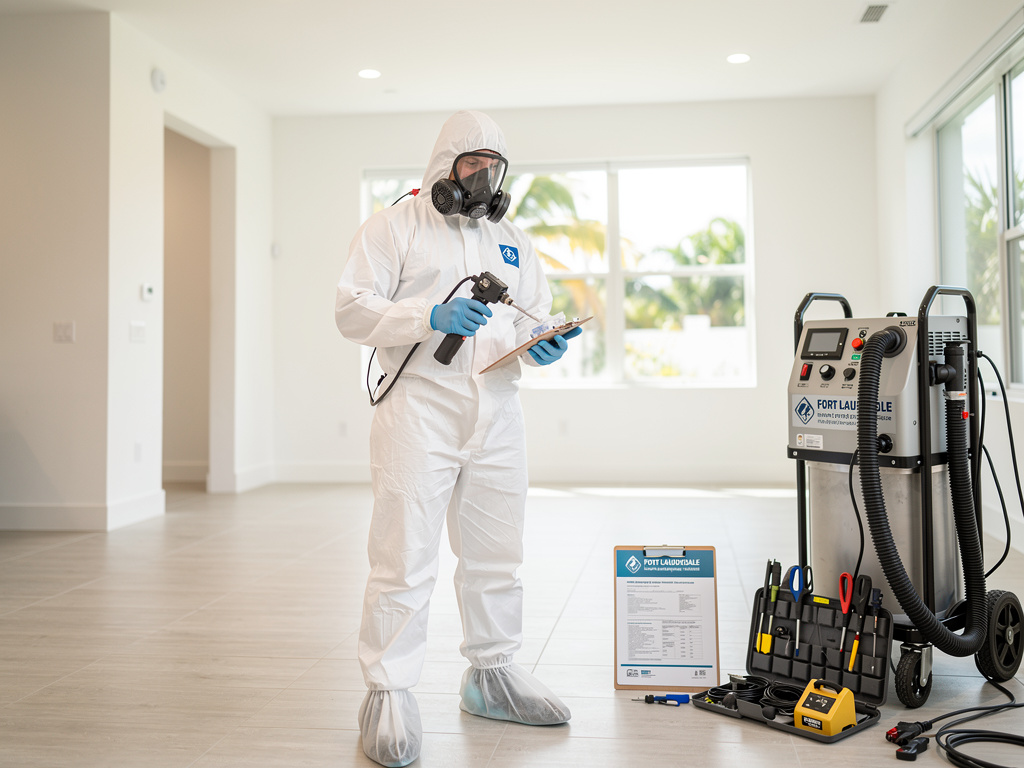
Living in Fort Lauderdale, with its warm subtropical climate and persistent humidity, I quickly learned that mold is more than just an eyesore—it’s a hidden threat lurking in many homes. Whether you’re nestled near the vibrant Las Olas Boulevard or close to the serene banks of the New River, the combination of moisture and heat creates perfect conditions for mold growth. That’s why understanding the mold inspection and testing process is essential for every homeowner in Broward County.
The mold inspection and testing process in Fort Lauderdale homes involves a thorough visual examination, moisture assessment, and air or surface sampling to detect mold presence and type. Certified professionals use specialized equipment and lab analysis to identify mold growth, even in hidden areas, ensuring an accurate diagnosis and tailored remediation plan.
Why Mold is a Persistent Problem in Fort Lauderdale
Fort Lauderdale’s subtropical climate means we experience high humidity levels year-round, often hovering around 70% or higher. This moisture, combined with the frequent rains and occasional flooding from storms or hurricanes, creates ideal conditions for mold spores to settle and proliferate inside homes. Many Broward County residences, especially older constructions near water bodies like the New River, are vulnerable to hidden mold growth behind walls, under floors, and in attics.
How Local Conditions Affect Mold Growth
The salty air near the Intracoastal Waterway and Las Olas area can accelerate building material deterioration, making surfaces more prone to mold colonization. Additionally, the common use of air conditioning systems in Fort Lauderdale homes can sometimes cause condensation buildup if units are not properly maintained, further promoting mold growth. Knowing these local risks helps mold inspectors focus their assessment on high-risk areas unique to our region.
The Mold Inspection Process: What to Expect
When you schedule a mold inspection with Fort Lauderdale Mold Remediation Pros, our certified inspectors start by conducting a detailed visual survey of your home. We look for obvious signs of mold such as discoloration, musty odors, water stains, or any indication of water intrusion from plumbing leaks or roof damage.
Using Moisture Meters and Thermal Imaging
Because mold thrives in damp environments, our team uses moisture meters to detect elevated moisture levels inside walls, floors, and ceilings that might not be visible to the naked eye. Thermal imaging cameras can reveal hidden water leaks or damp spots that often harbor mold, especially in areas like crawl spaces or behind drywall.
Air and Surface Sampling for Mold Testing
Once potential problem areas are identified, we collect air samples and surface swabs to determine the presence and concentration of mold spores. These samples are sent to accredited laboratories for analysis, which helps us identify the mold species present. This step is critical because some molds, like Stachybotrys (black mold), can pose greater health risks than others.
Interpreting Mold Test Results in Fort Lauderdale Homes
After lab results return, our experts review the findings with you in detail. Because mold spores are naturally present in outdoor and indoor air, we compare your home’s mold spore counts with outdoor baselines to assess if the levels inside your home are elevated. Elevated indoor spore counts, especially of allergenic or toxic mold types, indicate an active mold problem requiring remediation.
Customized Remediation Plans Based on Testing
Our mold remediation strategies are tailored to your specific situation—whether it’s removing mold from drywall near a leaky window in your Las Olas condo or addressing mold behind baseboards in your family home near Broward County’s waterways. Understanding the mold species and contamination level ensures we employ the most effective cleanup methods to protect your home and family’s health.
Frequently Asked Questions
How long does a typical mold inspection and testing take in Fort Lauderdale homes?
A comprehensive mold inspection and testing usually takes 2 to 4 hours depending on the size of your home and the extent of suspected mold growth. Sampling and lab analysis can take an additional 3 to 5 days for results.
Is mold testing necessary if I can already see visible mold in my home?
While visible mold indicates a problem, testing helps determine the mold species and extent of contamination, including hidden mold that might not be apparent. This information is crucial for effective remediation and preventing future growth.
Can I perform mold testing myself in Fort Lauderdale?
DIY mold test kits are available but often provide incomplete or inaccurate results. Professional mold inspectors have specialized tools and expertise to detect hidden mold and interpret results correctly, especially important given Fort Lauderdale’s unique climate challenges.
If you suspect mold in your Fort Lauderdale home or want a thorough inspection, don’t wait to protect your family and property. Call Fort Lauderdale Mold Remediation Pros at (954) 686-3836 today. Our experienced team is ready to provide expert mold inspection, testing, and remediation services throughout Broward County. Visit us at 300 SE 2nd St Suite 600, Fort Lauderdale, FL 33301, and take the first step to a healthier, mold-free home.